
- Others
- Other Theater
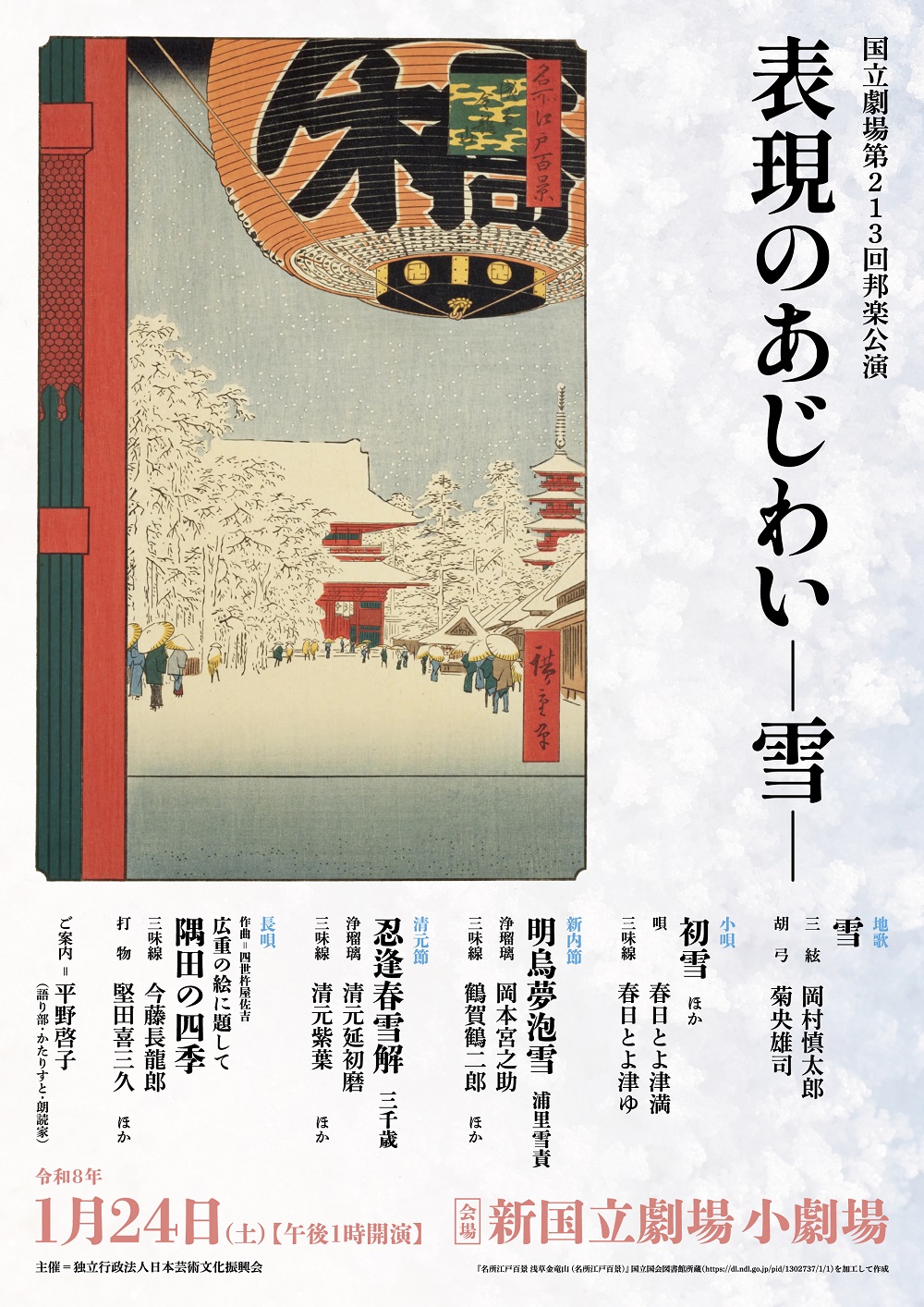
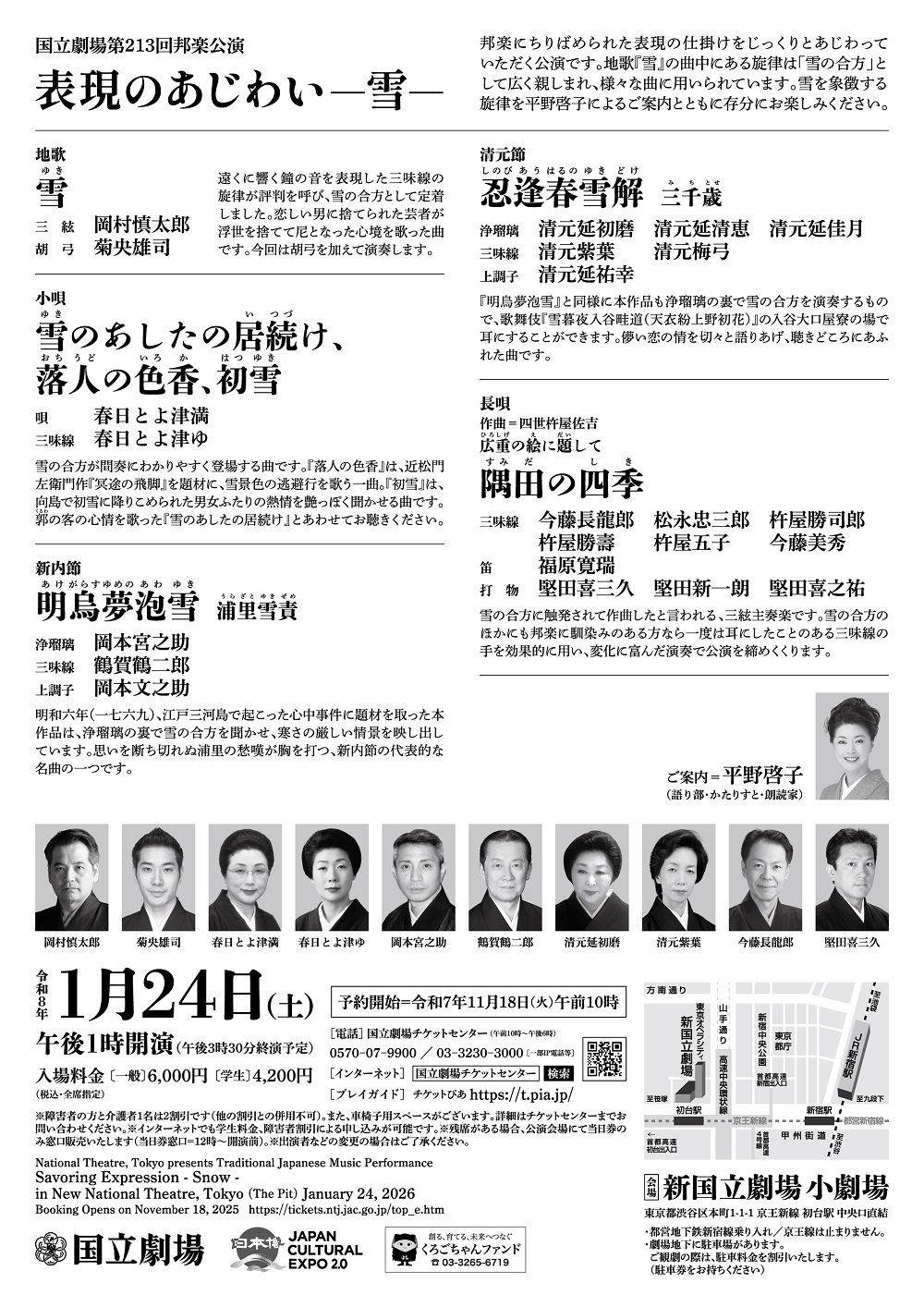
Savoring Expression -Snow-
New National Theatre,Tokyo(The Pit)
Savoring Expression -Snow-
Performance Date
January 24 (Sat.), 2026
Performance Time
1:00 p.m. - 3:25 p.m.
*The finish time is an estimate and may vary.
Jiuta
Yuki
Sangen : OKAMURA Shintarō
Kokyū : KIKUŌ Yūji
Kouta
Yuki no Ashita no Itsuzuke, Ochiudo no Iroka, Hatsuyuki
Uta : KASUGA Toyotsuma
Shamisen : KASUGA Toyotsuyu
Shinnai-bushi
Akegarasu Yume no Awayuki
Urazato Yukizeme
Jōruri : OKAMOTO Miyanosuke
Shamisen : TSURUGA Tsurujirō and others
Kiyomoto-bushi
Shinobiau Haru no Yukidoke
Michitose
Jōruri : KIYOMOTO Nobuhatsuma
Shamisen : KIYOMOTO Shiyō and others
Nagauta
Hiroshige no E ni daishite
Sumida no Shiki
Shamisen : IMAFUJI Chōtatsurō
Uchimono : KATADA Kisaku and others
Navigator : HIRANO Keiko
*English synopsis is available. Please ask at the reception desk.
Tickets (Tax included)
Adults: 6,000 yen (Students: 4,200 yen)
Seating plan[PDF/193KB]
Booking Opens
10:00 a.m., November 18 (Tue.), 2025
*20% discount for audiences with disabilites and one accompanying audience.
*Tickets for students and persons with disabilities for this performance are available online.
*Wheelchair spaces are available. For more details, please contact the Box Office.
*If there are still tickets available for purchase on the day of the event, you may purchase them in person at the Box Office (on-site) for this performance.
Box Office (on-site) : Open from 12:00 p.m. until curtain time.
-----------------------------------------------------------------------------
Box Office
0570-07-9900 (From overseas: +81-3-3230-3000) in English and Japanese (10:00 a.m. - 6:00 p.m.)
Click here to find the details about how to buy tickets.
---------------------------------------------------------
Savoring Expression -Snow-
This program puts a spotlight on melodies that symbolizes snow (“Yuki no Aikata”), featuring traditional Japanese music that incorporate such melody.
“Yuki no Aikata” refers to the long shamisen interlude in the Jiuta “Yuki” (Snow).
This melody appears in various songs accompanying scenes that depict falling snow, which has become a familiar musical representation of snow.
Listen carefully for these expressive elements woven into each piece, and immerse yourself in the appeal of traditional Japanese music.
Jiuta: Yuki
This piece depicts the sentiment of a geisha who is abandoned by her beloved man and leaves the floating world to become a nun.
The shamisen melody evokes the sound of a bell resonating in the distance on a poignant night and later becoming a staple of “Yuki no Aikata”.
Kouta: Yuki no Ashita no Itsuzuke, Ochiudo no Iroka, Hatsuyuki
This part is composed of different songs: “Yuki no Ashita no Itsuzuke”, which portrays the emotions of a pleasure-quarter patron; “Ochiudo no Iroka”, which depicts a man and woman escaping together through a snowy landscape; and “Hatsuyuki”, which expresses the passion shared by a couple in the first snowfall.
Shinnai-bushi: Akegarasu Yume no Awayuki—Urazato Yukizeme
A piece based on a true double suicide incident.
The “Yuki no Aikata” is heard against a background of chant and accompaniment of shamisen, evoking a scene of intense cold. The piece expresses the sorrow of the courtesan Urazato, who is unable to sever her feelings for a familiar patron.
Kiyomoto-bushi: Shinobiau Haru no Yukidoke—Michitose
This piece portrays a man who goes to say farewell to a familiar courtesan in the snow.
The narration conveys the melancholic sentiment of a fleeting love throughout the piece.
Nagauta: Hiroshige no E ni Daishite—Sumida no Shiki
This piece portrays the scenery of the four seasons along the Sumida River. While nagauta normally includes singing, this piece features only instruments, including the shamisen, allowing listeners to enjoy a rich variety of instrumental performance. In the winter scene, layers of shamisen evoke the image of snow piling up.